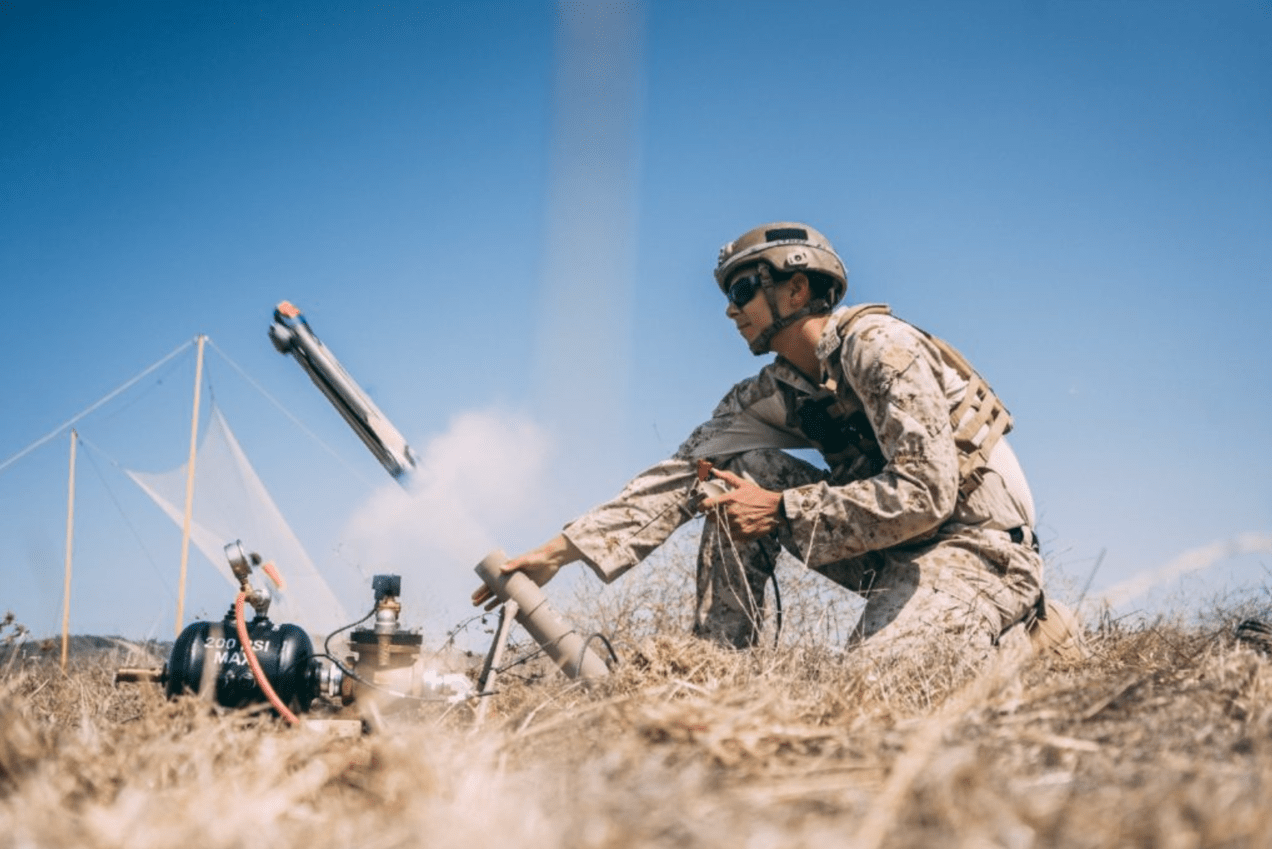
In 2017 J. Noel Williams, an American Defense strategist wrote a piece in “War on the Rocks”. The title caught my eye. KILLING SANCTUARY: THE COMING ERA OF SMALL, SMART, PERVASIVE LETHALITY. In it he said, loitering munition technology “will impact the character of warfare more substantially than the introduction of the machine gun.” He went on to call it “A revolution happening in plain sight”. I remember reading that sentence. And I read it a second time. It was astounding at the time.
Well– here we are 5 years later. The Revolution continues. Loitering Munitions have demonstrably changed tactical combat whether your enemy is Armor or Ground pounding Infantry and topography indifferent. By 2020 dozens of videos were on YouTube showing Azerbaijani military drones taking out Armenian tank after tank and all manner of mobile and fixed military assets. Among these fast becoming ubiquitous weapons is a system known as the “Switchblade”. We (the US) sent a bunch of the 300 models to Ukraine along with the shoulder-mounted Javelin MANPADS.
These weapons are the new reality of war. Many nations employ them. Some are our allies. Some are not. I was infantry in Vietnam. I would not have wanted to be in any other MOS. 11 Bravo Infantry.
But that was a half-century ago. In the analog era. where infantry soldiers of the 20th century were not dissimilar to their predecessors, a century before. Rapid advances in technology are forcing fundamental changes of Combat strategy and tactics. Drones, MANPADs, Loitering Munitions, Stand-off weapons, hypersonic missiles, and the less lethal but a huge leap into modernity for the infantry soldier: the Augmented Reality headset, called Integrated Visual Augmentation System(IVAS).
IVAS- they’re not ready yet. Plagued with development problems. But they’ll get there.
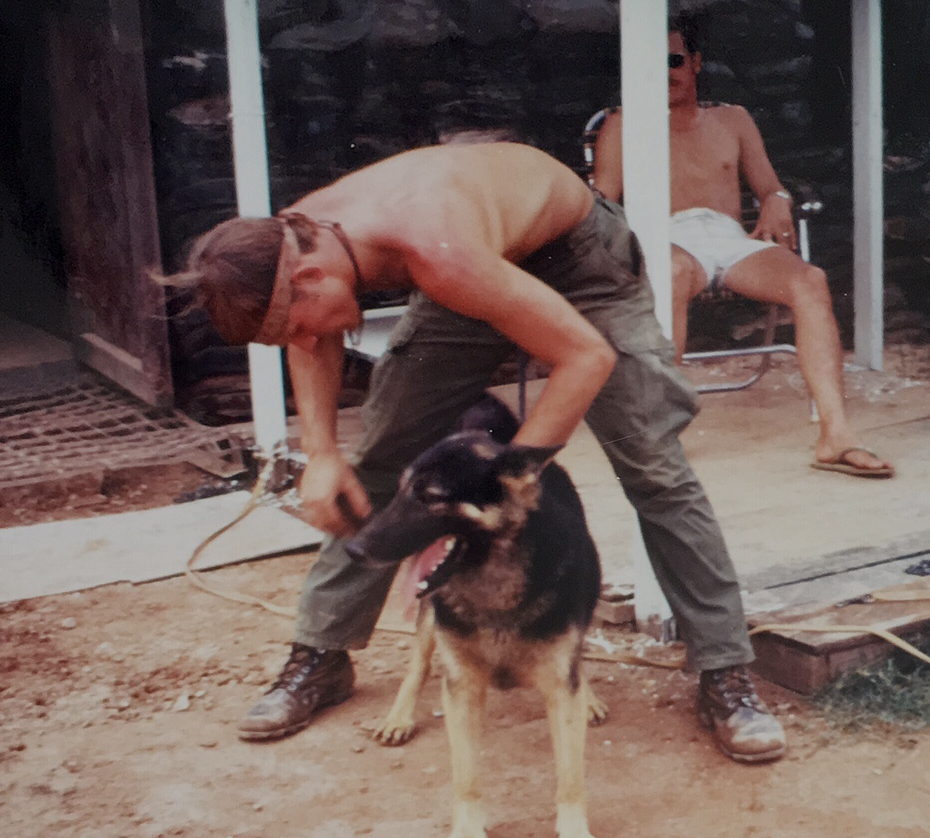
In Vietnam, navigation in triple canopy jungle meant paying attention to the topography and the map. Especially in a new AO. The Lt. would call over the platoon Sgt and the “Point Man” and discuss the topo. Do we move down that stream and then find a place to cut up the hill to our objective? Do we hump this overgrown trail that may or may not be booby-trapped? Or do we look for yet another route to get there? (I hated it when we used streams as our path for even a short duration. The rushing water masks all else. You can’t “hear” much.) Hearing matters in the Jungle. When the Lt. folds up his map and says “we’re going up that hill and set up an NDP. ” (Night Defensive Position) – talking was over, it was hump time. Most often through unknown terrain to a destination, we’d never been. I walked Point with my German Shepard dog.– When the Platoon Sgt. said, “RUCK UP”, you’d saddle up and move out. In the modern era with a Recon Drone and Infantry Headsets, the Lt. or the Platoon Sgt will pull a Butterfly sized drone out of his pocket while we’re still at the bottom of the hill, and it flys up and we all get a remote look at it (in our IVAS Googles). No *visible* bunkers up there? That’s a good sign.
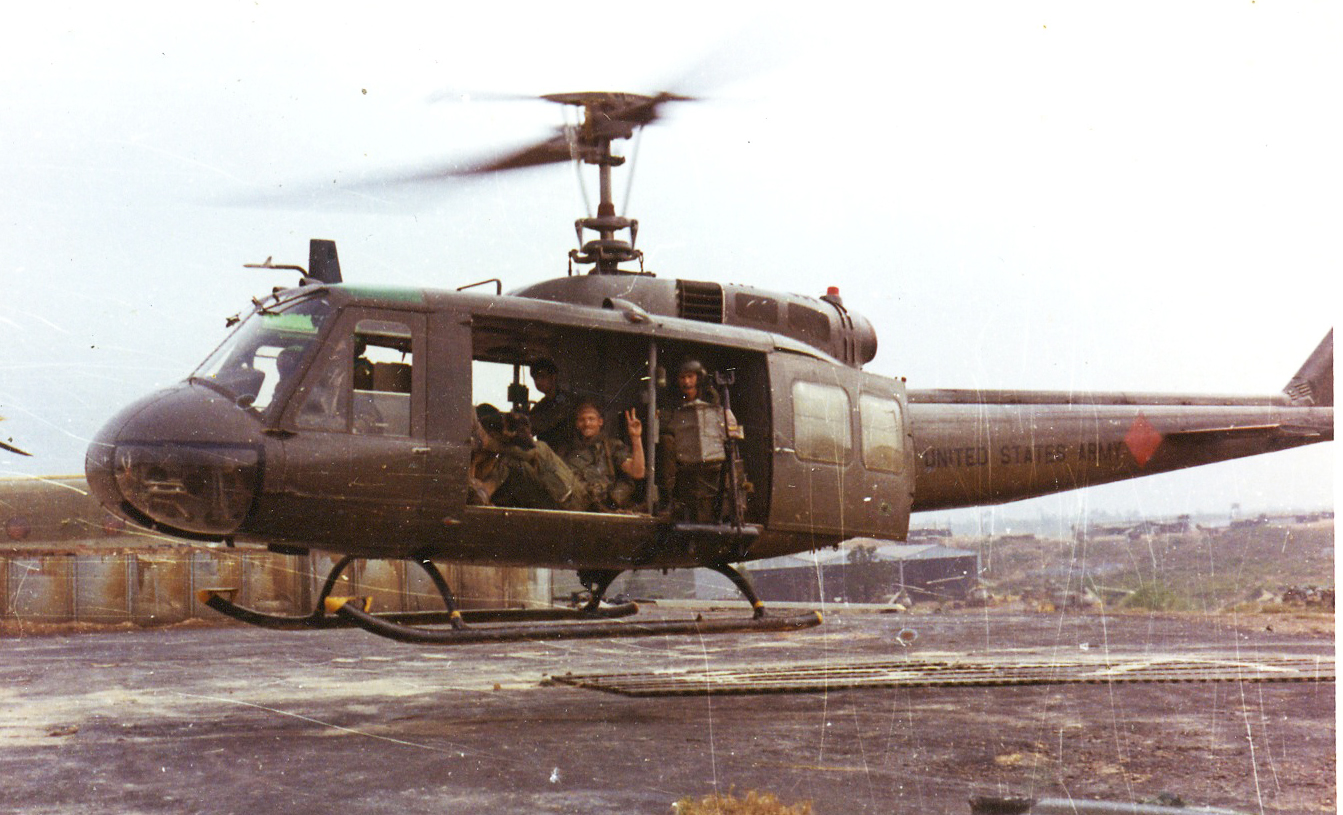
The Kid above in the chopper was lucky and got home without getting hit. You might have died from a “booby trap” or a B-40, a 122mm rocket, incoming artillery or an AK-47 round ripping your body apart. But there was a Human being involved somewhere in the Kill Chain. Warfare is now moving toward AI automation .
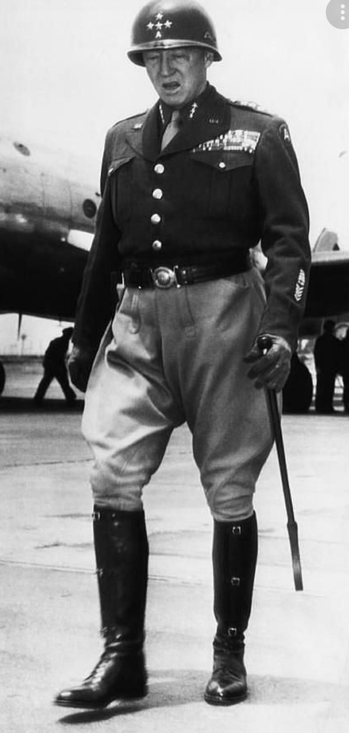
Remember that Scene in the movie “Patton“?
Correspondent : General, we’re told of wonder weapons the Germans were working on Long-range rockets, push-button bombing weapons that don’t need soldiers. What’s your take on that?
Patton : “Wonder weapons?” “My God, I don’t see the wonder in them. Killing without heroics. Nothing is glorified? Nothing is reaffirmed? No heroes, no cowards, no troops, no generals. Only those who are left alive and those who are left… dead. I won’t live to see it.“
General Patton was prescient.
If you’re interested in Military tactics and developments. The web site: “War on the Rocks” is must read.
Basic Training Graduation Photo: Ft. Bliss Texas Drill Sgt’s Annus (on left) Drill Sgt Semko (on right) You never forget the names of your Basic Training NCO’s.
I joined the Army in 1969. The Army has a battery of tests to figure out how to best use a new recruit. One of the questions was “Which would you rather do? Go to the Opera? OR Go camp out in Yellowstone National Park?
Of course, I answered the Campout!! “Yep.., He’s infantry material.“ I finished at the top of my class in Basic Training. And the Top 2 % Army Wide in Infantry training. I took Basic at Ft. Bliss –went to Infantry School at Ft. Lewis and Scout Dog Handler training at Ft. Benning. I landed in the 101st Airborne Division (I Corps) Vietnam 70-71. Vietnam was a defining experience for those of us who went, I”m glad I did. Combat Infantry. At the Tip of the Spear. It does not get any better.
My unit was the 42nd Infantry Platoon Scout Dog / 101St Airborne Division)
Location: Camp Eagle. Just got in from the field.
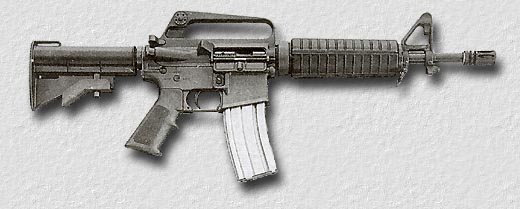
Cleaning my M-16–the day before a mission. I changed to a CAR-15 (with telescoping stock). The CAR-15 was much smaller -(they cut the barrel length and chopped 3 inches off the Stock.) It was a much more manageable weapon in the heavy thick jungle terrain of I Corps.
I was an Infantry Scout Dog Handler.
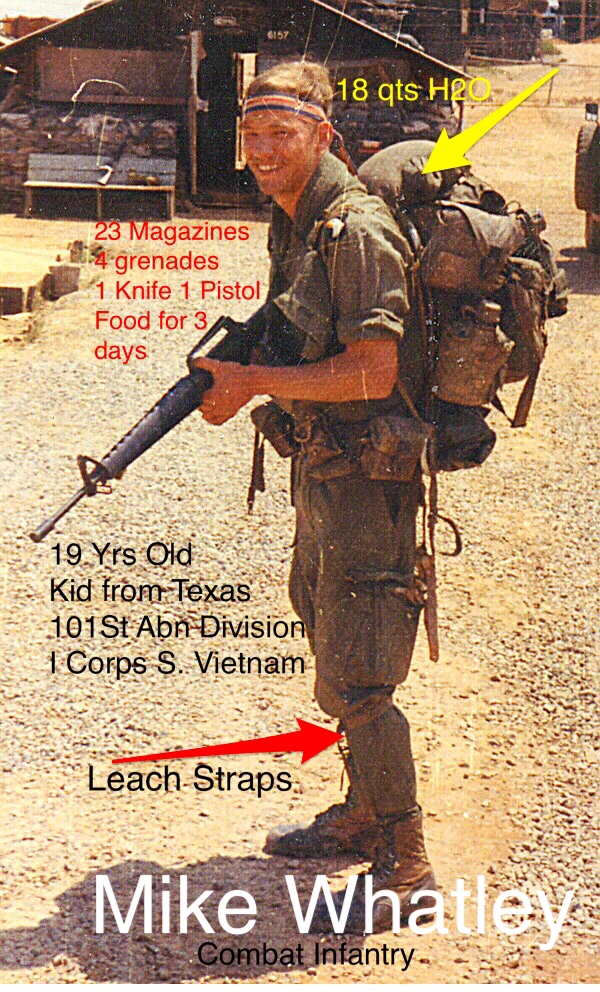
Scout Dog Teams walked “Point‘ on Infantry jungle patrols. The “mission” of the Scout Dog team is to provide “Early Silent Warning” of booby traps, ambush, cache’s of weapons, and evidence of enemy activity. The “Point” Man and his Scout Dog, (worked off leash) followed closely by the “slack” man. The “slack” position is filled by an experienced soldier to “backup” the “Point” team. NO CHERRIES! –My unit only had 3 CAR-15‘s (CAR-15 with shorter/telescoping stock ). CAR-15’s were issued to the 3 senior field opns soldiers in my unit. I didn’t get a CAR-15 until sometime in early spring of 71. — Photo above with M-16. I carried 23 magazines…. 2 (7) magazine OD green cotton cloth bandoliers across my chest. 2 Magazines on the weapon itself. (Taped in Reverse for rapid reload) 4 in a Pistol belt pouch on my right side — and 3 in an outer pouch of my Rucksack.– Carrying grenades was optional. My first few months in the field I carried 4 — I loosened the pin — which was hard as hell to first-time pull –– but I taped the spoon down so I had to remove the tape first. You only get one chance with a grenade. Improper pin removal, stance or throwing method could be fatal.— The Jungle is thick and lots of stuff grabs onto you. I didn’t want to chance any detonation with the M-26. I eventually dropped to carrying 2 grenades. I always started a mission with 18 quarts of water. That’s 2 lbs per quart =36 lbs of water alone Dogs dehydrate way faster than a Man. A Dog Handler couldn’t be sure his mission would be near the bountiful jungle streams. I always max- loaded water as if we would not be near a natural water source. In our AO (area of operation) there were many streams that fed the rivers., The Song Bo River out near the Ashau Valley was magnificent.
“Fuck-that! I’m not superstitious!” 1st Bde LZ @ Camp Eagle. OUT Bound.
My Scout Dog “Argo” his head over my leg as we lift off. Argo, loved watching the jungle below when we were flying on a mission, often at tree-top level. Sometimes his saliva would blow back onto the Door Gunner! ! They would always laugh! This was sometime in late 1970. My platoon Sgt. took me and Argo up to the LZ in a jeep. No one in my unit had their picture taken departing on a mission in over a year– according to unit lore.The last team to do so got hit on the mission. So there was this mystical belief about it. No one wanted to be photographed flying out-bound on a mission. After a few months I said, “fuck-that”, I’m not superstitious. If I get hit, having my photo taken won’t be the reason. We “Argo” and I walked “Point” in the Jungle. I live today because of that small ( 58 lb. Shepard) Best pure “Combat Dog” ever. ( Ok– I confess to hypocrisy. I always wore my lucky headband in the bush. Either around my neck or on my head under my “boonie” hat.–
My decorations: Among the most coveted awards in the US Army
101st Airborne Division Base Camp Eagle. On the BERM
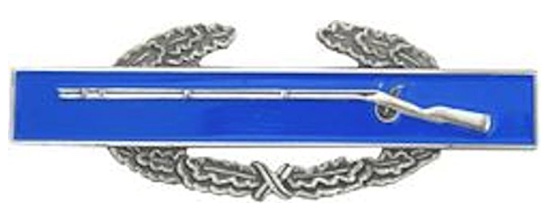
No Ceremony No Hand-shake The Presidential Combat Medal. The Bronze Star One of the great “Farce” awards in Vietnam. The DoD awarded 719,000 Bronze Stars during the entire Vietnam War. To say that it was given away like potato chips is not an exaggeration. The point is that many military awards are meaningless. I joined the Army for the adventure and the experience. I wouldn’t change a thing. Only the coveted CIB meant anything to me.
Most GI’s in Vietnam got a 5-7 day leave for “Rest and Recreation”. Your choices were Thailand for debauchery, Hong Kong, Australia and Honolulu. OR worst case. China Beach, an “In-Country” R&R.
I discovered photography in Vietnam and badly wanted a 35mm camera. I could buy the 35 mm camera– but then I couldn’t afford an out of country R&R. So I bought the camera and went to China Beach near DaNang. We surfed all day then got wasted every night listening to a Vietnamese Rock Band play American songs. They were awful musicians. We didn’t care!
Back in the World! After processing all night long at Ft. Lewis, Washington- we were released in brand new uniforms and officially out of the Army. The date was 2 July 1971. As we were getting on the Bus, I shouted, “Wait, we need a picture!” — The bus driver took my camera and then others and shot the group photo above. — Then he drove us to SeaTac International Airport– and off to civilian life we went! ( 11 days later I would be in summer school at the University of Texas at Austin )
Ft. Campbell Gander Memorial Service:Some 14 years later in 1985, I was working on a political story on Capitol Hill. The news desk editor called and told me that members of my former division had been in an airplane crash in Gander, Newfoundland. He asked if I wanted to go to Ft. Campbell for the Memorial service. (As if there was any question?? Of course!) He said, “yes we figured you would want to go”. The soldiers, most of them from the 101st Airborne Division’s 3rd Battalion, 502nd Infantry Regiment, crashed shortly after taking off from a refueling stop in Gander, Newfoundland, Canada. All 248 soldiers and the plane’s eight crew members were killed.
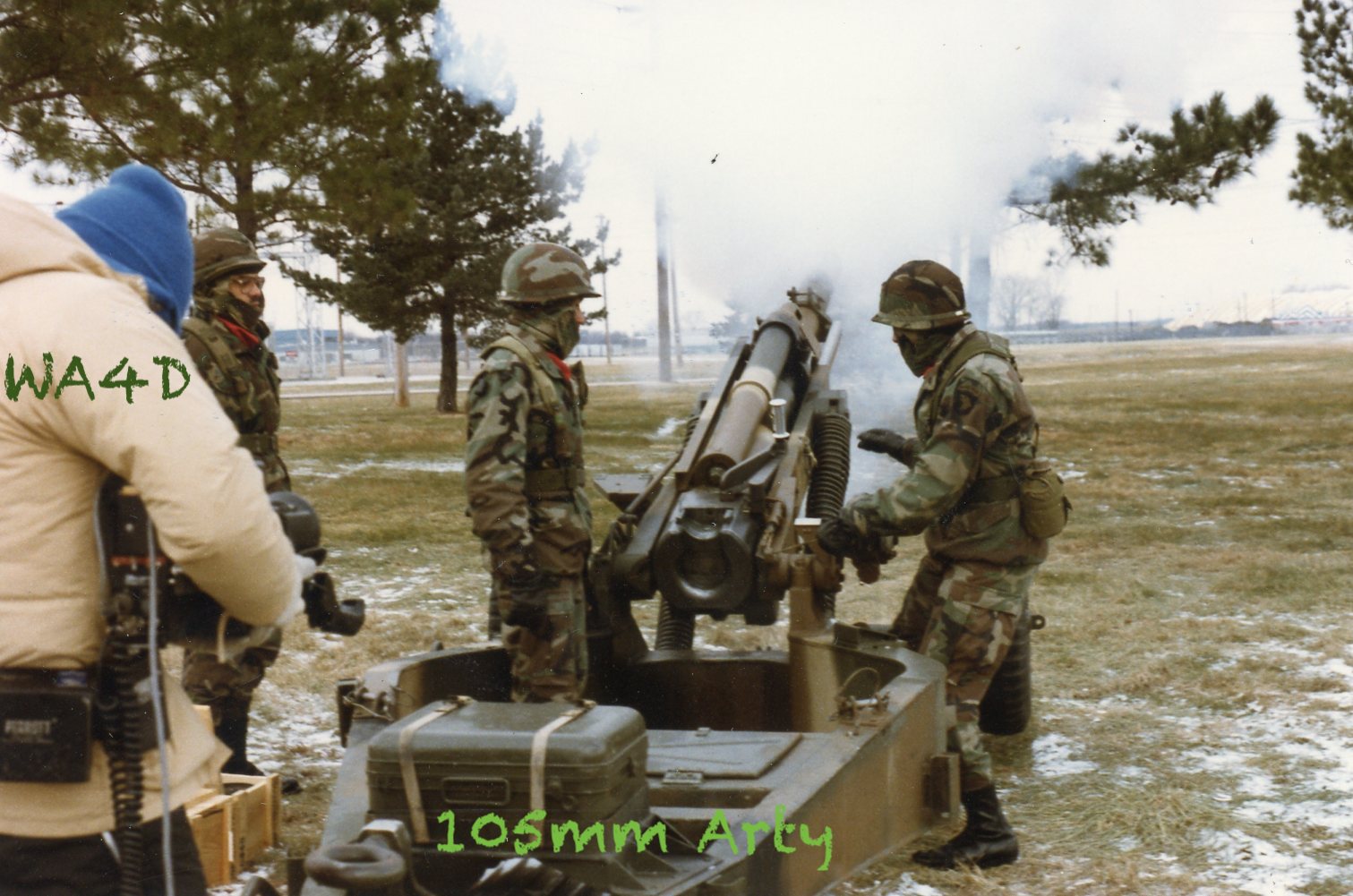
The Memorial Service was on Dec. 15/16 1985. It was bitter cold that day. In the 20’s with 9-10 mph winds. (I looked it up!) The division was formed on the parade field for hours. And we in the press stayed in the stands for hours. Above: A 105mm howitzer was fired every 5 minutes, marking the loss of one soldier
Steeped in history, it is an honor to have been a “Screaming Eagle” of the 101st Airborne Division.
Above: Professionally I returned to Vietnam in 1995. We shot a documentary at the 20-year point of the war’s end. It was an amazing trip. We traveled the entire country. Photo. Above: –POW/MIA recovery dig near Haiphong in the north
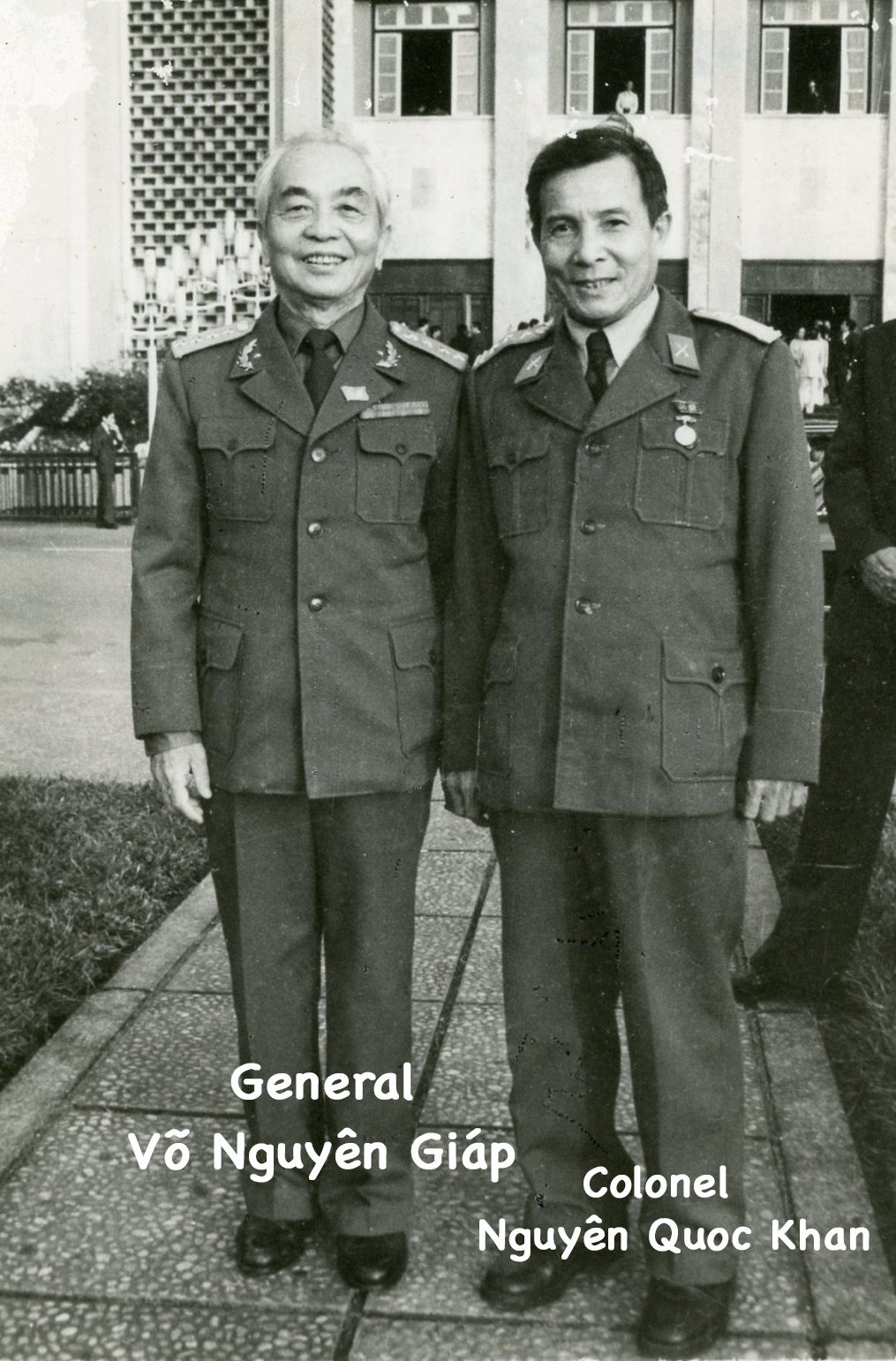
Above: Mike Whatley left, Vietnamese government official and interpreter in Center with Retired North Vietnamese Infantry Colonel Nguen Quoc Khan. He was a big deal. How I got to talk with him still boggles my mind. We stayed in his hotel in Hue. Retired at the time of photo–He was dressed in uniform for a military parade that morning, that was held in honor of General Võ Nguyên Giáp.
One of the most important photos I’ve ever taken.
I shot this photo of General Vo Nguyen Giap in Hue, on March 24, 1995. It was pouring rain and he was under a reviewing stand roof. I was in the rain and I could not believe my good fortune. Security allowed me within about 20 feet of the General. Many historians regard Giap as one of the greatest military strategists of the 20th century. I knew that as I pressed the shutter. I had read Bernard Fall’s “Hell in a Very Small Place: The Siege of Dien Bien Phu” in college. And this elderly soldier, in full uniform on the platform that rainy day was the Commander that defeated the French in 1954. He was a hugely important military figure in the lives of all of us who went to Vietnam. (I shot the photo in a downpour with my small point n shoot film camera and then I prayed the image would come out. — Image above is cropped.)
Above: The statue of now Senator John S. McCain, where he was captured as his parachute dropped him in Trúc Bạch Lake in Hanoi. It was a pretty heavy moment to stand before this statue. I think of it often now as he lays dying of brain cancer in Arizona.
McCain was taken prisoner of war on October 26, 1967. I was a Senior in high school. He was flying his 23rd bombing mission over North Vietnam when his A-4E Skyhawk was shot down by a missile over Hanoi. He would remain in prison for 6 years. I graduated High School in 1968, joined the Army in 1969, went to Vietnam 70-71 and was discharged and back in college— And all of that time John McCain (tortured and beaten many times) remained in prison until 1973. Take a couple of minutes to think about that. What a sacrifice.
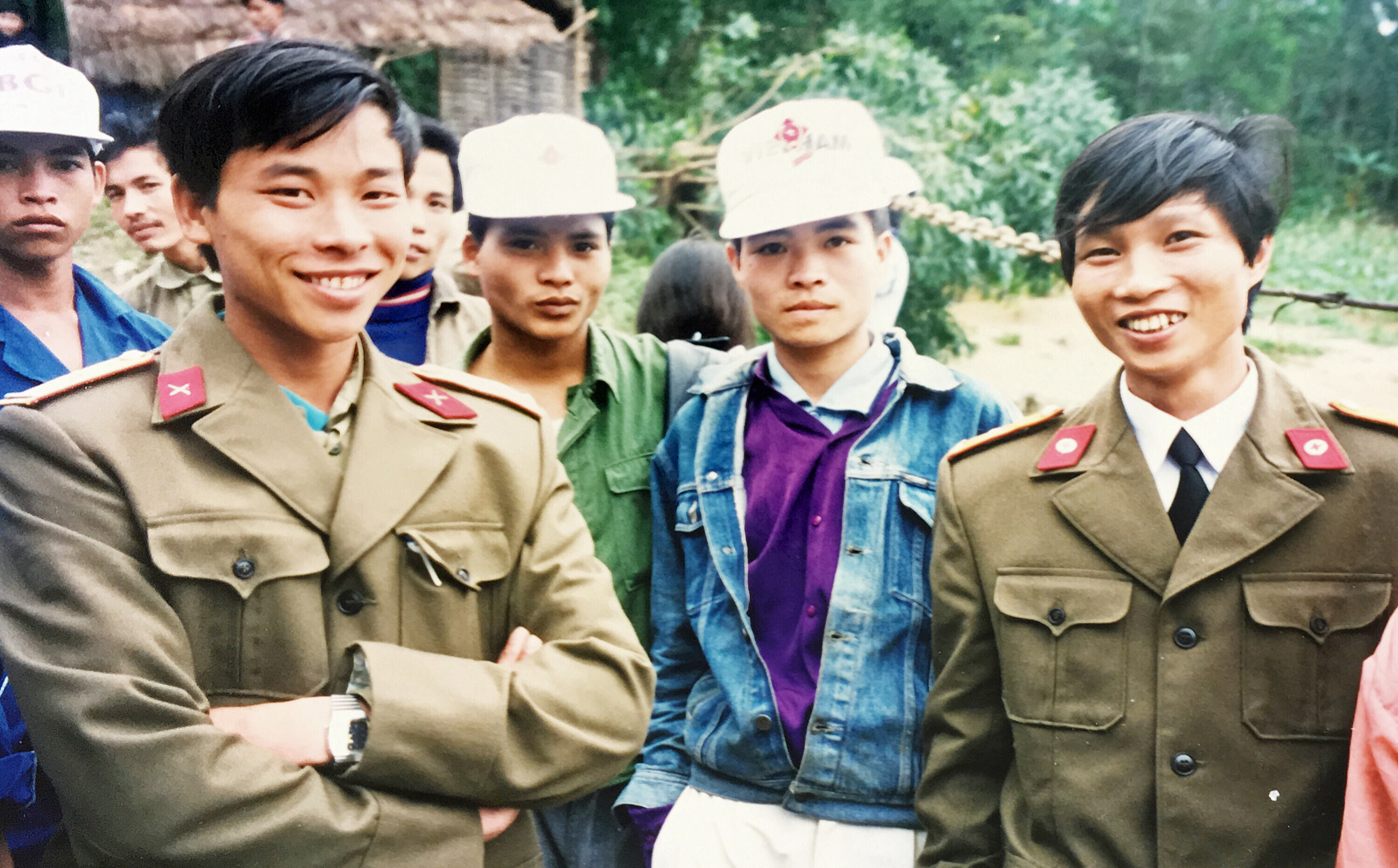
Above: The young men in this photo were in their 20’s in 1995. Even then their posture, expressions and confidence showed. I wish I could interview them now.
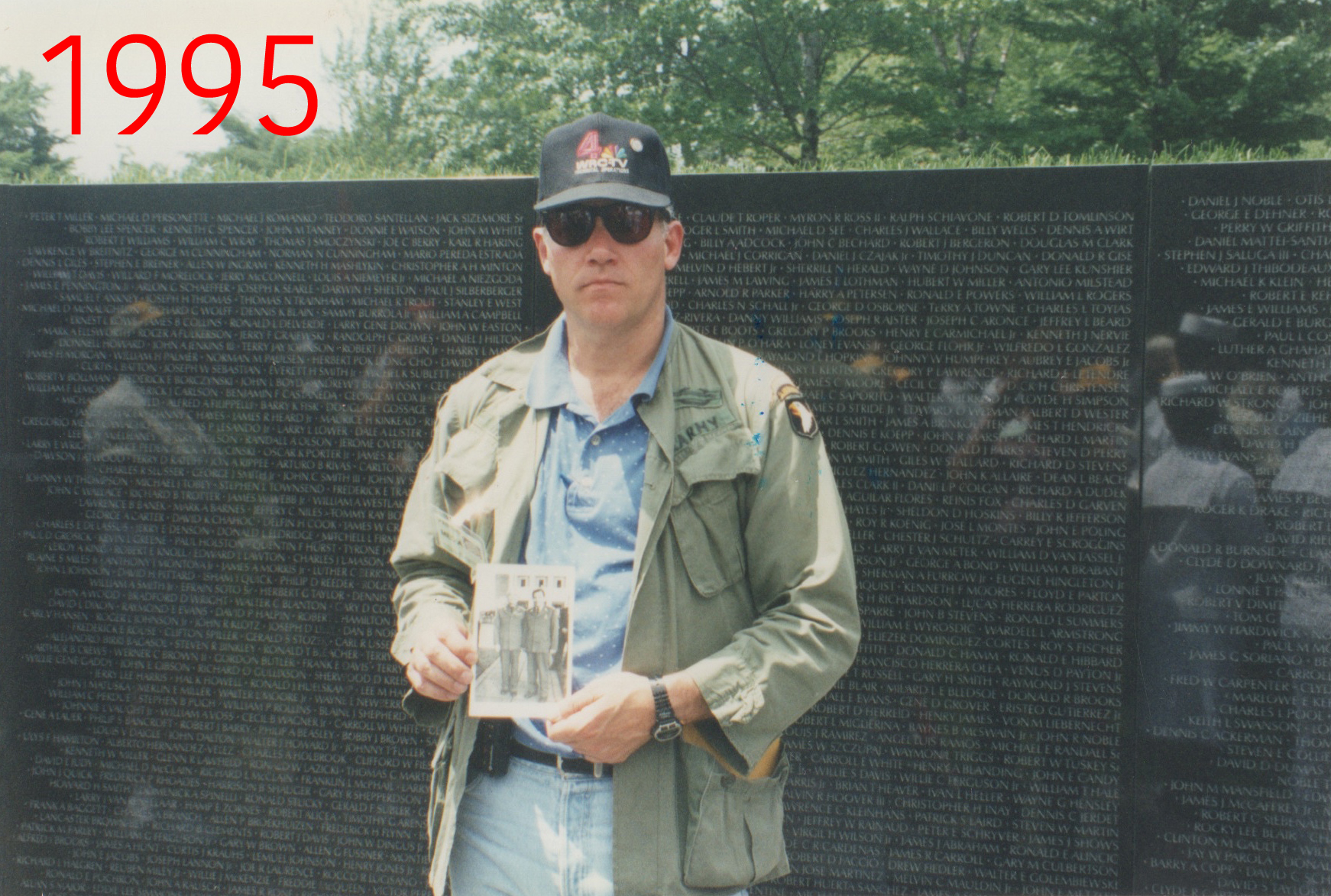
Mike Whatley at the Vietnam Veterans Memorial in Wash DC with photo shown below given to me by Colonel Nguyen Quoc Khan.
ABOVE: 1986 Photo of Vietnamese General Võ Nguyên Giáp and Infantry Colonel Nguyen Quoc Khan. The day we left Hue in 1995, Colonel Khan gave me the photo above with an inscription on the back.
The series “20 Years since the Fall” won 2 Regional Emmy’s.
ln 1995 Jan Scruggs (President of the Vietnam Veterans Memorial Fund) hosted a luncheon in Rosslyn, Va.– It was held in the Key Bridge Marriott on the top floor. The view is fantastic, overlooking the Potomac toward the “Wall”. Those of us fortunate enough to attend were given this commemorative knife. In many ways to me– it represents the final act of the Vietnam War.